
A transponder helps ATS identify an aircraft and display useful surveillance information. For VFR pilots, the practical objective is to use the correct code, transmit altitude when available, and follow ATS instructions or national procedures.
Ref: SERA.13001, SERA.13005, SERA.13010, ICAO Doc 4444 identification principles.
I. IN BRIEF
This part is only a summary. Find all diagrams and detailed explanations in the following sections of the article for a better understanding.
I.1 STANDARD CONTINGENCY CODES
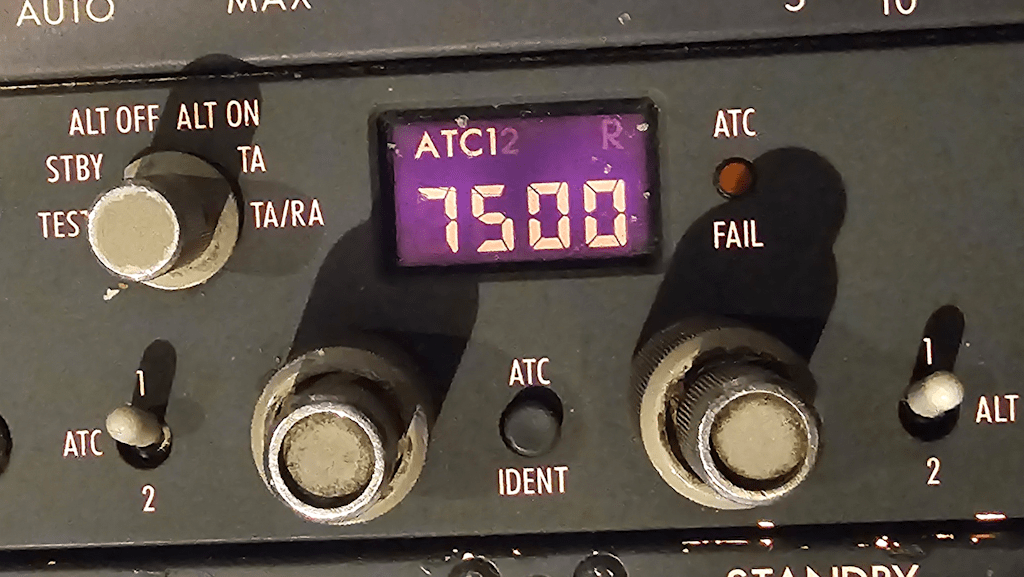
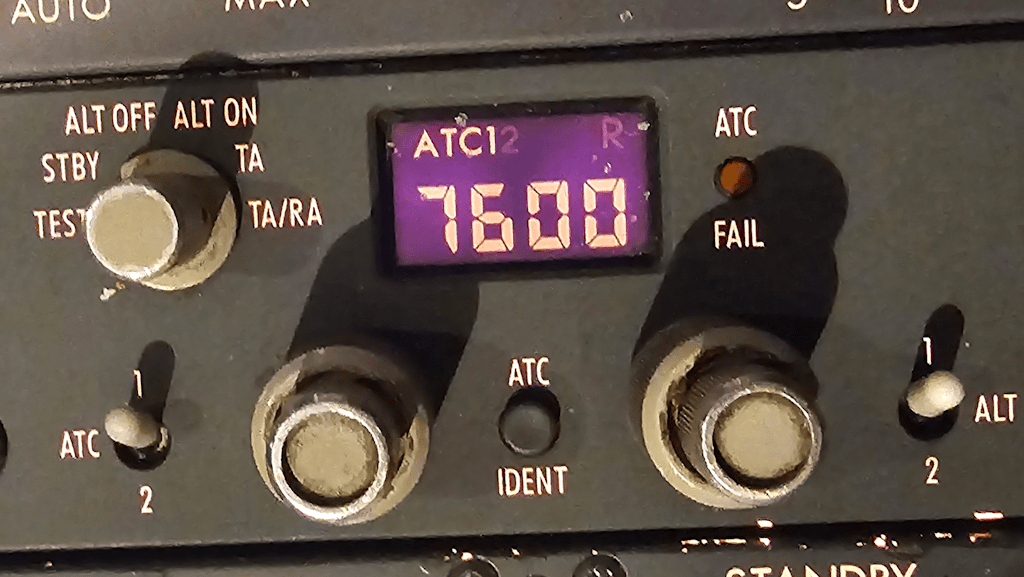
7500 = unlawful interference;
7600 = radio-communication failure;
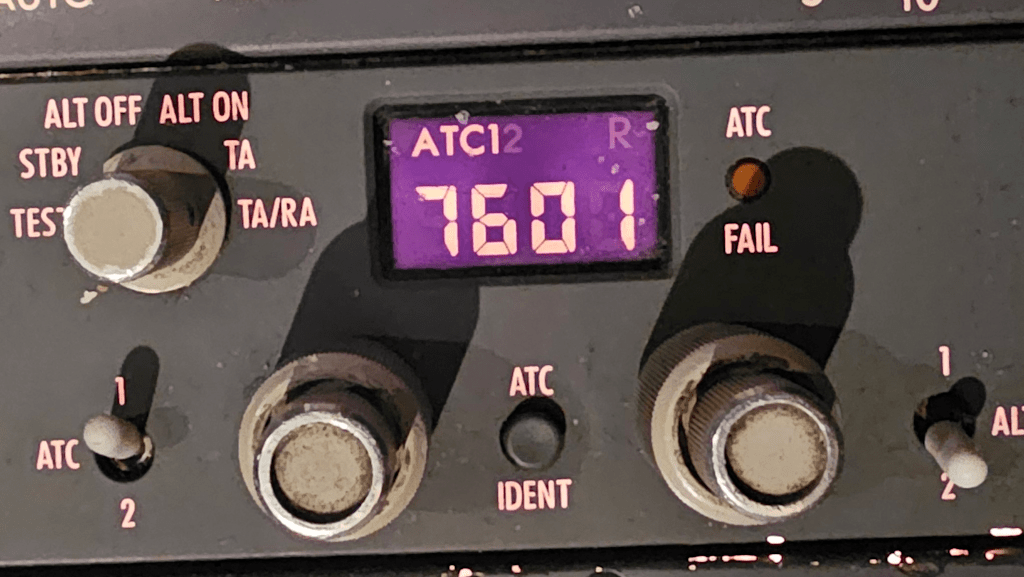
7601 = IFR radio-communication failure, when the flight encounters VMC and continues visually to land at the nearest suitable aerodrome;
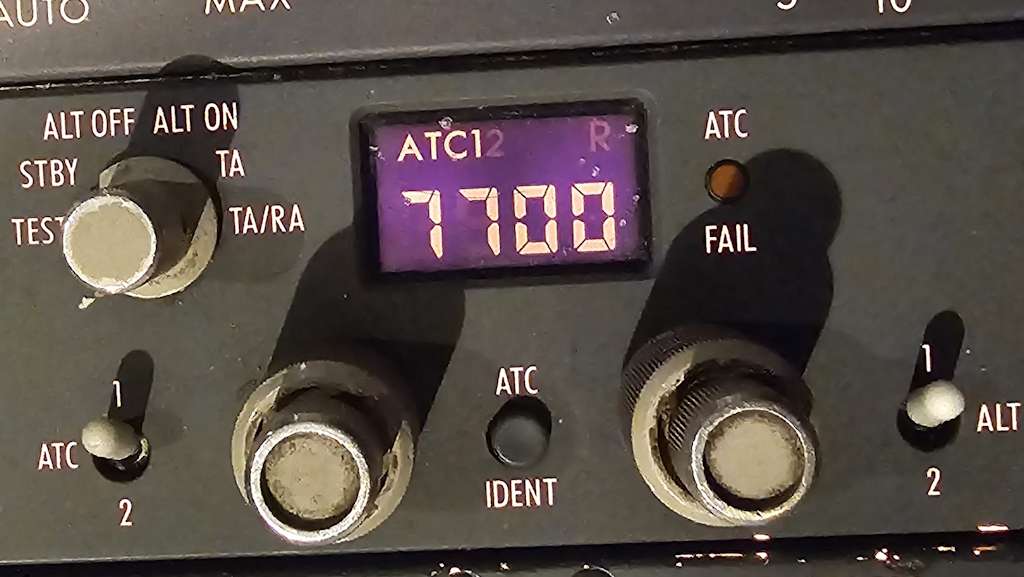
7700 = emergency.
I.2 7000, 2000 and national codes
The pilot shall select the code instructed by ATS. If no ATS code-setting instruction is given, the pilot should select 2000 or another code prescribed by the competent authority. When not receiving ATS, the pilot should select 7000 unless otherwise prescribed.
Always check the national AIP, as national procedures may differ.
I.3 Modes and functions
Mode A (“Alpha”) transmits the selected four-digit squawk code.
Mode C (“Charlie”) adds pressure-altitude reporting.
Mode S (“Sierra”) can transmit additional surveillance information, such as aircraft identification and pressure altitude.
II. Standard contingency codes
7500 = unlawful interference;
7600 = radio-communication failure;
7601 = IFR radio-communication failure, when the flight encounters VMC and continues visually to land at the nearest suitable aerodrome;
7700 = emergency.
7601 is not a general VFR emergency code. It appears in SERA for an IFR flight with radio communication failure when the pilot encounters VMC, decides to continue in VMC, lands at the nearest suitable aerodrome, and reports arrival.
For unlawful interference, the pilot should attempt to select 7500; if circumstances require, 7700 should be used instead.
II.1 7000, 2000 and national codes
The pilot shall select codes as instructed by ATS; in the absence of ATS instructions related to code setting, select 2000 or another code prescribed by the competent authority; and when not receiving ATS, select 7000 unless otherwise prescribed.
National codes: check the AIP
Some squawk codes are not universal. SERA gives the general European rule, but the competent authority may prescribe national procedures. Before flying in another country, check the national AIP, especially ENR 1.6 or the relevant surveillance procedures section.
EXAMPLE
In the absence of ATS instructions related to code setting, France prescribes:
-
- code 2000 for IFR flights in the flight information regions of metropolitan France;
- code 7000 for VFR flights in the flight information regions of metropolitan France;
- code 2000 in overseas airspace operated by the French administration.
Do not present 2000 as a “common VFR code”. At European SERA level, 7000 is linked to aircraft not receiving ATS, unless otherwise prescribed. National rules may specify something else.
II.2 Squawk IDENT
IDENT is used by ATS as an identification method on the surveillance display. The aircraft target is then highlighted on the controller’s screen for a short time. Standard phraseology includes “SQUAWK IDENT” or “SQUAWK [code] AND IDENT”.
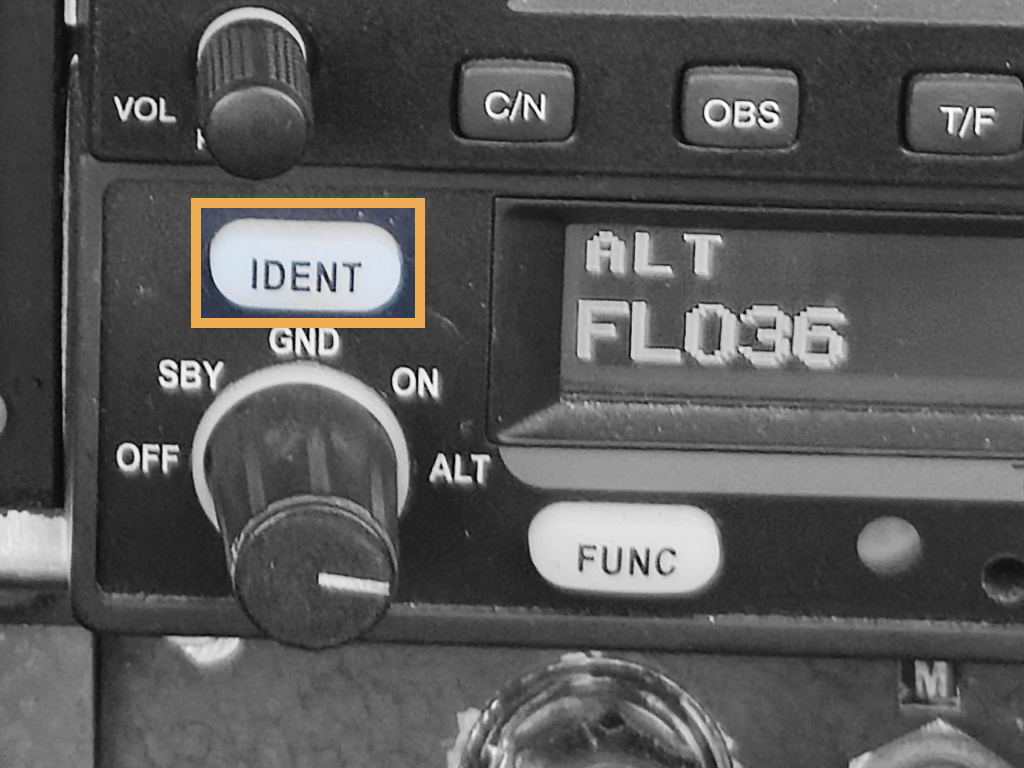
The pilot must not operate IDENT unless requested by ATS.
EXAMPLE
“F-ICAR, squawk 0747 and ident.”
III. What the transponder does
Primary radar detects aircraft without relying on aircraft equipment. Secondary surveillance radar (SSR), MLAT and ADS-B rely on aircraft-transmitted data to help ATS identify the aircraft on a surveillance display.
III.1 Modes and functions
III.2.1 Mode A (“Alpha”)
Mode A sends the selected four-digit SSR code to surveillance systems. This code may be assigned by ATS, selected for a standard situation, or used for a contingency.
Examples of information transmitted:
-
- Selected squawk code only, such as 7000, 7600, 7700 or an assigned code (e.g. 5434).
III.2.2 Mode C (“Charlie”)
Mode C adds pressure-altitude reporting to the Mode A reply. This allows ATS systems to display the aircraft’s level. The transmitted altitude is pressure altitude, not necessarily the altitude shown on the pilot’s altimeter set to local QNH. See our article “Understanding Altimetry: A Practical Guide for Private Pilots” for more information about the different types of altitude.
Examples of information transmitted:
-
- selected squawk code;
- pressure-altitude-derived level information.
If serviceable Mode C equipment is carried, it must normally remain active unless ATC instructs otherwise.
If ATC detects that the altitude displayed from the transponder is wrong, the pilot may be asked to check the pressure setting and confirm the aircraft’s level.
If the discrepancy remains, ATC may ask the pilot to:
-
- select another transponder, if available;
- stop Mode C or ADS-B altitude transmission. On the transponder shown below, this would normally mean selecting ON instead of ALT;
- or continue transmitting, with ATC treating the displayed altitude as unreliable.
Incorrect Mode C information can also affect ACAS/TCAS, because ACAS may use erroneous altitude replies.
III.2.3 Mode S (“Sierra”)
Mode S provides more advanced surveillance capability. It supports selective interrogation and can transmit aircraft identification and pressure-altitude information.
Examples of information that may be transmitted:
-
- aircraft identification / flight ID;
- aircraft registration when no flight plan is filed;
- pressure altitude;
- aircraft 24-bit address;
- transponder capability.
The important pilot action is to ensure that the transmitted aircraft identification is correct.
The aircraft identification transmitted should conform to the format specified for Item 7 of the ICAO flight plan form.
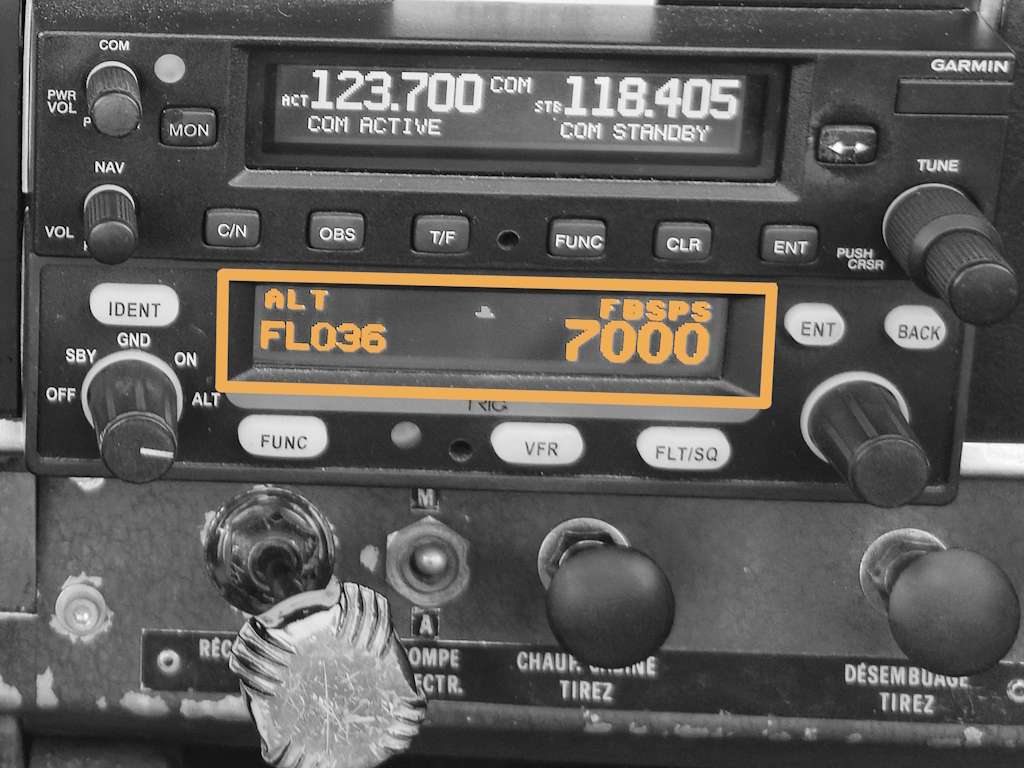
This is a Trig TT31 Mode S transponder. In ALT mode, it transmits the selected squawk code and pressure-altitude information. As a Mode S transponder, it can also transmit Mode S data such as aircraft identification / Flight ID, depending on configuration. ADS-B OUT capability depends on the installation and GPS connection. If connected to a GPS source, the TT31 can transmit ADS-B OUT position data to compatible ground stations and aircraft.
As explained in the Mode C section, selecting ON allows the transponder to reply to interrogations, but altitude reporting is not transmitted.
If the aircraft identification transmitted by Mode S or ADS-B does not match what ATC expects, ATC may ask the pilot to confirm it and, if necessary, re-enter the correct aircraft identification.
If the discrepancy remains even after the pilot confirms the correct setting, ATC may treat the displayed identification as unreliable, correct the label where possible, and inform the next ATS unit concerned.
III.2.4 Mode S ELS and EHS
Mode S Elementary Surveillance provides basic Mode S surveillance data. Enhanced Surveillance can provide additional aircraft parameters to ATS, depending on the aircraft equipment and applicable requirements.
Examples of ELS-type information:
-
- aircraft identification;
- 24-bit aircraft address;
- pressure altitude;
- flight status;
- transponder capability.
Examples of EHS-type information may include:
-
- selected altitude;
- magnetic heading;
- indicated airspeed or Mach number;
- vertical rate;
- track or ground speed data, depending on the installation.
For most VFR pilots, ELS and EHS are mainly equipment and configuration topics rather than in-flight handling topics.
III.2.5 ADS-B
ADS-B can automatically broadcast aircraft data, depending on the installed equipment. Some ADS-B OUT installations use the Mode S transponder.
Examples of information that may be transmitted:
-
- aircraft identification;
- position;
- altitude;
- ground speed;
- track;
- vertical rate;
- emergency or urgency status, depending on equipment.
For VFR pilots, the key point is to ensure the equipment is correctly configured and the aircraft identification is correct.
III.2.6 TCAS / ACAS
TCAS/ACAS uses transponder replies from nearby aircraft to detect potential conflicts. It may use information such as range, bearing and altitude to generate traffic advisories (TA) and, on equipped aircraft, resolution advisories (RA).
- Traffic advisories (TA), which alert the crew to nearby traffic that may become a threat;
Resolution advisories (RA), which give vertical manoeuvre guidance to avoid or reduce the risk of collision.
IV. When to operate the transponder
-
- In flight, operate the transponder at all times if it is serviceable and carried.
- Mode C: keep altitude reporting active when serviceable, unless ATC instructs otherwise.
- On the ground, follow local aerodrome procedures published in the AIP or local instructions. Local aerodrome rules may require transponder operation on the movement area.
IV.1 Controlled airspace, TMZ and monitoring codes
-
- If ATS assigns a code, set that code.
- In a Transponder Mandatory Zone (TMZ), aircraft must carry and operate a suitable SSR transponder: either Mode A/C or Mode S, unless the ANSP has published specific alternative procedures for that airspace.
IV.2 Common mistakes
-
- Leaving the transponder on standby in flight conflicts with the SERA requirement to operate a serviceable carried transponder at all times during flight.
- Forgetting altitude reporting conflicts with the requirement to operate serviceable Mode C continuously unless ATC says otherwise.
- Pressing IDENT without request conflicts with SERA.13001(b).
- Assuming that 2000 or 7000 has the same meaning in every country. SERA allows competent authorities to prescribe national procedures, so pilots should check the AIP.
V. Transponder failure
-
- If the failure is detected before departure and cannot be repaired at that aerodrome, the aircraft may be allowed to proceed to a suitable aerodrome where repair can be carried out, subject to ATC, published procedures and any applicable exemption requirements.
- If a transponder fails after departure and the flight is operating, or expected to operate, in airspace where a functioning transponder is mandatory, ATC should try to allow the flight to continue to the planned destination. However, depending on traffic and airspace, the aircraft may be required to return to the departure aerodrome or land at another suitable aerodrome.
VI. REFERENCES
SERA.2005
SERA.6005
SERA.13001
SERA.13005
SERA.13010
SERA.13015
SERA.13020
SERA.14083